
Our Take: Roof ventilation is not just a summer fix. It is a year-round strategy to cut energy costs and protect your home from Oklahoma’s extreme weather swings. We focus on systems that balance airflow, reduce attic heat, and prevent costly damage like ice dams or mold.
Quick Summary:
- Proper ventilation lowers attic temperatures by 30–50°F in summer.
- It prevents moisture buildup and ice dams during harsh winters.
- Balanced intake and exhaust airflow are key to maintaining energy efficiency.
Here is why this matters for your roof – and your wallet.
Roof Ventilation and Insulation: The Moisture and Energy Connection
How Roof Ventilation Works
Roof ventilation operates on a straightforward principle: cool air enters through intake vents at the lower points of your roof, flows through the attic, and exits through exhaust vents at the highest points. This airflow happens due to wind pressure and differences in air density between the inside and outside of your home.
Think of your attic as a channel for airflow. Fresh air enters through soffit vents near the eaves and picks up heat and moisture as it moves upward. The warmer, lighter air rises naturally and escapes through ridge vents or other exhaust points at the roof’s peak. This continuous cycle prevents heat from building up in the attic, keeping it closer to outdoor temperatures. As a result, your home stays cooler, and the thermal envelope – the barrier between your climate-controlled interior and the unconditioned attic – remains effective.
The roof assembly is a critical part of this thermal envelope. Proper ventilation supports this barrier by stopping uncontrolled air movement, also known as infiltration. Infiltration happens when air leaks inward due to wind or air density differences, which can disrupt the balance of your home’s heating and cooling systems.
Types of Roof Ventilation Systems
Different types of vents work together to ensure proper airflow:
- Ridge vents: Installed along the roof’s peak, these provide continuous exhaust, allowing hot air to escape evenly across the roofline.
- Soffit vents: Located under the eaves, these bring in fresh air at the roof’s lowest points, creating the intake airflow.
- Gable vents: Positioned on the vertical walls at the attic’s ends, these can act as intake or exhaust vents, though they’re less effective than ridge and soffit systems.
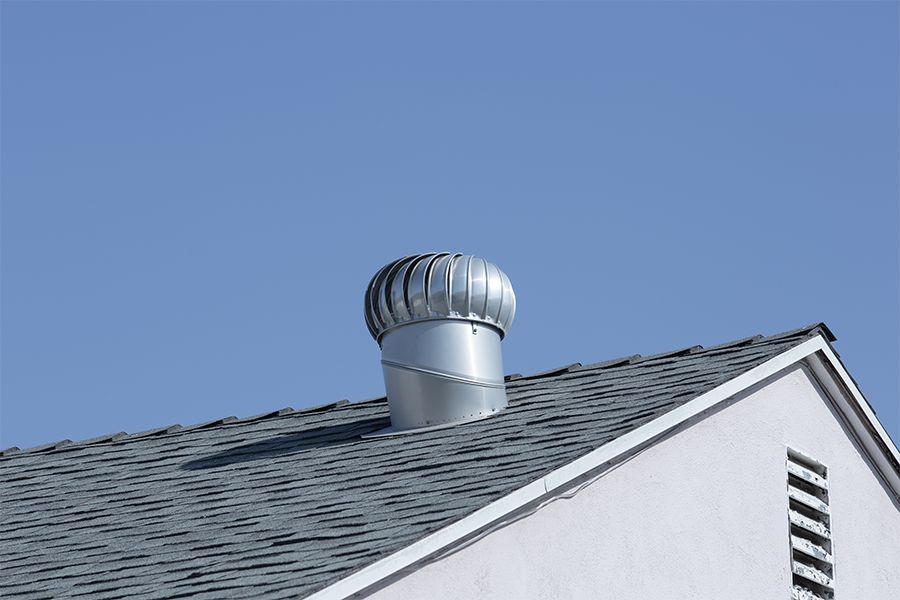
- Turbine vents: These spinning metal fixtures use wind power to pull hot air out of the attic but require consistent breezes to function properly.
While each vent type has its role, the most efficient system combines continuous soffit intake with continuous ridge exhaust for steady airflow.
Balanced Airflow Principles
For ventilation to work effectively, intake and exhaust must be balanced. Equal capacity on both ends ensures smooth airflow through the attic.

When exhaust exceeds intake, negative pressure can form in the attic, pulling conditioned air from your living spaces through gaps in the ceiling and insulation. On the other hand, if intake outpaces exhaust, hot air gets trapped in the attic. Both scenarios disrupt the thermal envelope and force your HVAC system to work overtime.
Want professional advice? Stop by our Edmond office at 213 W 18th St, Ste 160, Edmond, OK 73013 or give us a call at (405) 235-6000. We offer free roof inspections across the Oklahoma City metro area.
Summer Energy Savings with Roof Ventilation
Oklahoma summers are no joke. Attics can hit scorching temperatures of 150°F or more, even when it’s only in the 80s°F outside. That trapped, superheated air doesn’t just stay in the attic – it seeps into your living spaces, forcing your air conditioner to work overtime.
The solution? Proper roof ventilation. Ridge vents expel hot air while soffit vents pull in cooler air, creating a steady airflow. This setup can lower attic temperatures by 30°F to 50°F. Ideally, your attic should stay just 10°F to 20°F warmer than the outdoor temperature.
The payoff isn’t just comfort: you’ll save money. Studies show that good attic ventilation can cut cooling energy use by 10–40%, trimming overall energy bills by 10–30%.
Reducing Attic Heat Build-Up
Balanced airflow is the key to stopping attic heat in its tracks. By continuously venting hot air through ridge vents, you prevent heat from building up and radiating into your home. This can lower indoor temperatures by as much as 10°F, giving your air conditioner a much-needed break.

Less strain on your HVAC system means it lasts longer, too. A central air conditioner typically costs $4,000 to $8,000 to replace, with an average price of $5,800. Ventilation helps extend its lifespan, saving you from premature replacements and hefty repair bills. Pro tip: Never block soffit vents with insulation. Use rafter vents or baffles to keep air flowing freely from the eaves to the ridge.
Extending Roof Lifespan
Extreme attic heat doesn’t just hike up cooling costs – it also wreaks havoc on your roof. Temperatures above 150°F can make shingles brittle, loosen granules, and weaken adhesive strips.
Ventilation protects your roof by keeping attic temperatures in check. Consistent airflow prevents the constant expansion and contraction of materials caused by extreme heat, which leads to cracking, warping, and early aging. Without proper ventilation, a roof designed to last 25 years might only make it 15.
By investing in ventilation, you’re not just saving on energy – you’re also safeguarding your roof and setting yourself up for year-round efficiency.
Got questions or need advice? Stop by our Edmond office at 213 W 18th St, Ste 160 or call us at (405) 235-6000 for a free roof inspection anywhere in the Oklahoma City metro.
Winter Benefits of Roof Ventilation
When we think about roof ventilation, summer heat often comes to mind. But winter brings its own challenges, and having the right ventilation system in place is just as critical. It can protect your roof from damage and even help with energy efficiency.

Preventing Ice Dams
Ice dams are a winter roofing nightmare. They form when heat escapes from your home into the attic, warming the roof deck and causing snow to melt unevenly. That water runs down to the colder eaves, refreezing into a dam that traps water under your shingles.
The solution? Proper ventilation. By keeping attic temperatures close to the outdoor air, ventilation prevents the uneven heating that leads to ice dams. Soffit vents pull in cool air, while ridge vents let warm air escape, creating a balanced airflow. This process keeps the roof deck cool and ensures snow melts evenly, reducing the risk of dangerous ice buildup at the edges.
Good airflow also helps tackle other winter issues, especially those caused by moisture.
Reducing Moisture and Mold Risk
Winter activities like cooking, showering, or even breathing produce warm, humid air. This air rises into the attic, where it can condense on cold surfaces if ventilation is lacking. Over time, this trapped moisture can lead to mold growth, wood rot, and even structural damage.
Ventilation acts as your roof’s defense system. It removes humid air from the attic before it has a chance to condense, keeping humidity levels low. This protects your roof’s structure and prevents insulation from becoming damp and ineffective. Without proper airflow, moisture can weaken roof framing and even create health risks for your family.
Got questions or concerns? Stop by our Edmond office at 213 W 18th St, Ste 160 or give us a call at (405) 235-6000. We offer free roof inspections across the Oklahoma City metro area.
sbb-itb-f94da89
Calculating Roof Ventilation Needs
Getting roof ventilation right starts with understanding your roof’s size and using straightforward calculations. Proper ventilation avoids moisture problems and unnecessary expenses. Let’s break down how to calculate ventilation needs and compare vent options for the best airflow.
Net Free Ventilating Area (NFVA) Formula
The Net Free Ventilating Area (NFVA) measures the open space in vents that allows air to flow. The standard guideline is 1 square foot of ventilation for every 150 square feet of attic floor space (a 1/150 ratio).
For example, a 1,500-square-foot attic would need 10 square feet of ventilation. To balance airflow, split this equally: 5 square feet for intake (soffit vents) and 5 square feet for exhaust (ridge vents).
If your attic has a proper vapor barrier and balanced intake and exhaust, you might use a 1/300 ratio instead. This reduces the requirement to 1 square foot of ventilation per 300 square feet of attic space, cutting costs while maintaining energy efficiency.
Need professional advice? Stop by our Edmond office at 213 W 18th St, Ste 160, Edmond, OK 73013 or call us at (405) 235-6000. We offer free roof inspections throughout the Oklahoma City metro area.
Comparing Vent Types
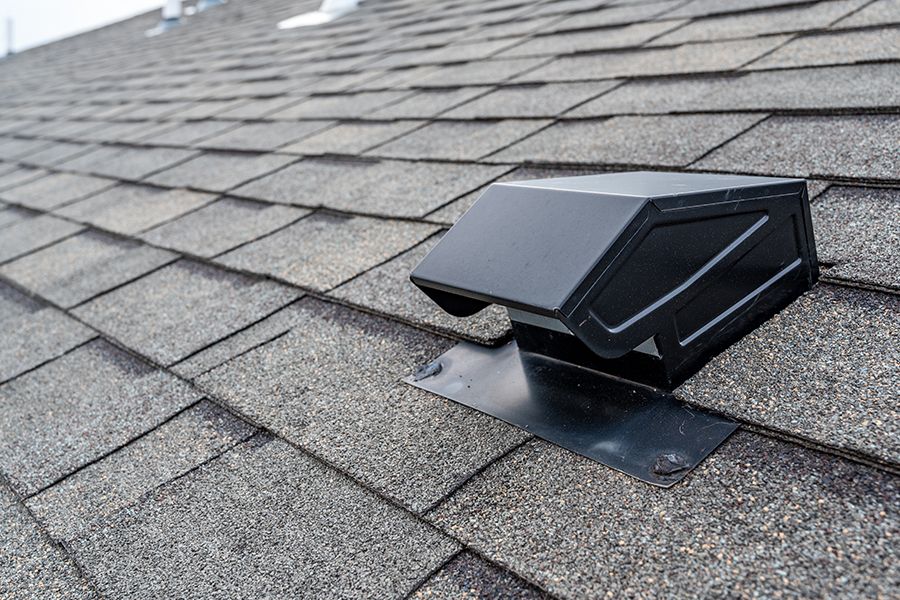
Ridge vents combined with soffit vents provide continuous and balanced airflow. On the other hand, box vents and turbine vents usually offer less ventilation and may create uneven airflow patterns.

Powered attic fans can pull conditioned air from your home if the attic isn’t properly sealed. They also require electricity and regular upkeep. For Oklahoma’s weather, passive systems like ridge vents with continuous soffit vents are often the best choice. They deliver reliable, year-round performance without the added costs of electricity or maintenance. Choose vents that align with local energy codes and perform well in Oklahoma’s unique climate.
Steps to Upgrade Roof Ventilation
Upgrading your roof ventilation can be straightforward if you break it into three main stages: inspecting what’s already in place, installing the right components, and maintaining the system over time. Here’s how we approach each step to ensure your roof stays efficient and problem-free.
Inspecting and Clearing Existing Ventilation
The first step is to inspect your attic and ventilation system. Look for blocked intake and exhaust vents – common culprits include debris, insulation, or even pest nests clogging soffit and ridge vents. While you’re at it, check for signs of trouble like moisture, mold, or water stains, which could mean your system isn’t working as it should.
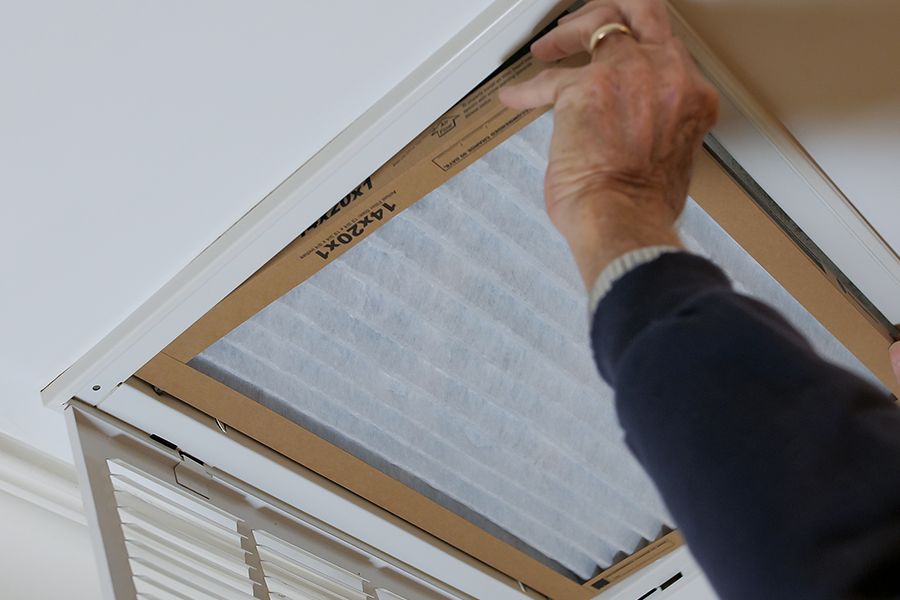
Take note of the type and number of vents you have. Clearing any obstructions is key, but it’s important to do this carefully to avoid damaging the vent structures. If you’re unsure or want to be thorough, a professional inspection is the safest route.
Want professional help? Stop by our Edmond office at 213 W 18th St, Ste 160, Edmond, OK 73013 or give us a call at (405) 235-6000. We offer free roof inspections across the Oklahoma City metro area.
Once the inspection and clearing are complete, it’s time to upgrade your system with high-quality, GAF-compatible components.
Installing GAF-Compatible Ventilation Solutions
After ensuring your current system is clear and properly evaluated, the next step is installing GAF-compatible ventilation products. These systems are designed to optimize airflow and energy efficiency. Our team carefully removes or works around existing roofing materials, installs intake vents at the roof’s lowest points, and places exhaust vents at the peak to ensure proper airflow.

Spacing and sealing are critical. Poor installation can lead to leaks or disrupt the balance between intake and exhaust, which reduces efficiency. That’s why we follow GAF’s strict guidelines, ensuring the job is done right. Plus, using GAF-approved products means your GAF Golden Pledge® or Silver Pledge® warranty remains intact.
Most residential upgrades take between one and three days, depending on the size of your attic and the complexity of the system. We also make sure everything complies with Oklahoma building codes.
Regular Maintenance Tips
Once your new ventilation system is in place, regular maintenance keeps it running smoothly. Here’s how to stay on top of it:
- Inspect vents quarterly: Clear debris and trim back any overhanging branches that could lead to buildup.
- After storms: Check vents from the ground for visible damage and inspect your attic for leaks around vent areas.
- Seasonal checks: In Oklahoma, where weather can swing from scorching summers to icy winters, spring and fall are prime times to make sure your system is ready for the extremes.
- Watch your insulation: Make sure it isn’t blocking soffit vents, as this can restrict airflow and hurt efficiency.
Taking these steps ensures your upgraded ventilation system continues to perform well, saving energy and protecting your home for years to come.
Measuring Energy Savings from Roof Ventilation
Once you’ve upgraded your roof ventilation, it’s time to measure the benefits. This step highlights how proper ventilation helps improve energy efficiency throughout the year in Oklahoma’s unpredictable climate. The good news? You don’t need fancy tools or complex calculations. A few simple methods can show how your investment is working for you.

Tracking Utility Bill Changes
One of the simplest ways to see energy savings is by comparing your utility bills before and after the upgrade. Start by gathering at least a year’s worth of bills from before the installation. These will serve as your baseline. Pay attention to average monthly costs, peak usage patterns, and local weather data – like cooling degree days (CDD) for summer and heating degree days (HDD) for winter. The National Weather Service for Oklahoma City is a great source for this information.
After the upgrade, compare bills from the same months in following years. Use the same metrics to ensure accuracy. For example, a typical Oklahoma home can cut summer cooling costs by 10–20% due to reduced air conditioner runtime, which often drops by 20–30%. To pinpoint the impact of ventilation, track your kWh usage, total costs, average temperatures, and HVAC runtime (a smart thermostat can help with this). Eliminate non-HVAC expenses by focusing on itemized sections of your bills.
Take one example: a 2,000-square-foot home in Oklahoma City reduced its July electric bill from $350 (1,200 kWh) to $280 (960 kWh) after proper ventilation was installed. That’s a 20% savings, or about $840 annually. These savings were confirmed by comparing July bills over two years with similar weather conditions of around 900 CDD.
Want a professional opinion? Stop by our Edmond office at 213 W 18th St, Ste 160, Edmond, OK 73013 or call us at (405) 235-6000. We offer free roof inspections across the Oklahoma City metro area.
But utility bill savings are just the beginning. To fully understand the financial impact, it’s worth looking at long-term returns.
Estimating Long-Term Return on Investment
Energy savings are only part of the equation. Proper roof ventilation also reduces wear and tear on your HVAC system and extends the life of your roof. Both of these factors can lead to significant savings over time. To calculate your return on investment (ROI), use this formula:
(Annual Energy Savings + Annualized Roof Lifespan Extension Value – Maintenance Costs) / Initial Installation Cost × 100.
Here’s an example: Let’s say you spend $2,000 on a ventilation upgrade. If it saves you $500 annually on energy costs and extends the life of your 20-year roof by 5 years (delaying a $5,000 replacement by five years, or about $1,000 per year), your net annual savings would be $1,400. That’s a 70% first-year ROI, with the upgrade paying for itself in 2–4 years.

Proper ventilation can also reduce HVAC strain by 20–30%, extending the life of your unit by 3–5 years. This could save $3,000–$5,000 on premature replacement costs. Additionally, it may extend your roof’s lifespan by around 25%, delaying a $15,000 roof replacement. Over a decade, total savings could exceed $10,000. GAF-certified contractors agree that with proper ventilation (meeting the 1/150 NFVA code ratio), ROI can often be achieved in less than three years.
There’s also a positive environmental impact. Improved ventilation can lower annual CO₂ emissions by 0.5–1 ton for an average home, thanks to a 15–25% reduction in energy use. For perspective, saving 1,000 kWh equates to roughly 0.7 tons of CO₂ at the U.S. grid average. This reduction pairs with $200–400 in yearly utility savings, making the financial and environmental benefits go hand in hand.
Conclusion
Proper roof ventilation isn’t just a seasonal concern; it’s a year-round investment that improves energy efficiency and extends the life of your roof. By keeping attic temperatures balanced in the summer and controlling moisture in the winter, ventilation safeguards both your home and your wallet. As stated in the Oklahoma Residential Code 2018: "This chapter shall regulate the design and construction of buildings for the effective use and conservation of energy over the useful life of each building". Following these principles helps conserve energy while protecting your roof for years to come.
When combined with insulation and air sealing, improved ventilation strengthens your home’s overall protection. Upgrading during a reroof or repair isn’t just practical – it’s a smart move that pays off in energy savings and compliance with energy codes. For Oklahoma homeowners, it’s a decision that makes sense both financially and functionally.
Have questions or need help? Stop by our Edmond office at 213 W 18th St, Ste 160 or give us a call at (405) 235-6000. We offer free roof inspections across the Oklahoma City metro area. Let our team help you get the most out of your roof.
FAQs
How can I tell if my attic ventilation is unbalanced?
Unbalanced attic ventilation often reveals itself through several warning signs. You might notice curling or peeling shingles, which can signal trapped heat. Higher energy bills can also point to poor airflow, as your HVAC system works overtime to regulate temperatures.
Other red flags include mildew or musty odors, which suggest moisture buildup, attic or ceiling leaks, and even sagging roof lines. Each of these issues points to ventilation problems that shouldn’t be ignored. Addressing them early can prevent more serious damage down the line.
Can adding ventilation cause roof leaks or void my warranty?
Properly installed ventilation won’t lead to roof leaks or void your warranty, as long as it complies with building codes and follows the manufacturer’s guidelines. In fact, well-designed ventilation protects your roof by preventing water buildup and helps ensure your warranty remains intact.
What’s the fastest way to estimate how much ventilation my attic needs?
To get a quick estimate of your attic ventilation requirements, make sure the functional ventilation area is at least 1/144th of the attic’s total floor area. This ratio aligns with Oklahoma’s energy efficiency standards and ensures proper airflow while keeping your home energy-efficient throughout the year.